Kathleen Barnes

Your guide to a long, healthy life while living gently on the planet

Archive for September, 2009

Sept 28, 2009

Here‘s a little rant about social networking.

In recent times, you were nobody if you weren’t on Twitter. It was an essential business and personal branding tool.

I am on Twitter (@KathleenSBarnes) and am approaching 2,400 followers. Not too shabby. I have some wonderful followers who post interesting stuff.

But lately, I find I have to make myself to go Twitter and post a couple of pithy 140-character comments each day. I actually miss a lot of these.

Why? Because I find my inbox inundated with new followers that offer nothing less than spam. There are the ads to get thousands of new followers effortlessly, multi-level marketing companies promising untold riches and folks who want to sell me coaching packages for “only $997.”

That’s not even mentioning the uptick in pornography. Hey folks, I’m not a guy. Not many people named “Kathleen” are guys.

When Twitter began, it was frankly, silly. I mean, who cares if you’re at Starbucks drinking a latte or sitting in the dentist’s office?

Then Twitter hit its heyday in 6 or 8 months ago with interesting people saying interesting things, folks tweeting from the plane that made an emergency landing in the Hudson River, even tweeting news stories before the conventional news media caught on to the fact that news was breaking and the people on the scene had already gotten the word out. News organizations even began creating Twitter accounts so they could get the early scoops. Who could forget the power of the tweets that came out of Iran after the stolen election? That was social networking at its zenith.

During that heady time, I could hardly wait to logon in the mornings and dip my toes into the unending stream of interesting and thought-provoking information. I found myself enticed back there several times a day. I used TweetDeck to stay up to date with group of followers whose tweets I found the most useful. I probably spent too much tie there, but I know I learned a great deal and I am richer for the experience.

I hope that, in return, I offered information that was of value to them. I will continue to do so, although perhaps less frequently.

I’m waiting out this deluge of scamsters, get-rich-quick schemes and other mindless nonsense. Hopefully, this will pass and Twitter will regain some of its fascination for me. If not, I’ll move on to something more exciting and useful.

Until then, I’m choosing to spend less time on Twitter. Call it asocial networking. I’m spending more time on some exciting new projects I’ll be telling you about soon. It’s more productive and more personally satisfying. I promise not to scam you or spam you. Ever.

  • Share/Bookmark

Unprecedented shortages of dessicated or natural thyroid hormones like Armour thyroid and Nature-Throid are causing serious problems for patients with hypothyroidism.

Shortages of Armour thyroid have become fairly common in recent years, but the recent shortage of Nature-Throid indicates the pressure to take patients off the natural hormones that have been available for 100 years and force them onto synthetic thyroid hormones.

Minimum 90-day back order

Both Armour and RLC Labs, manufacturer of Nature-Throid and a similar formula called Westbrook, have announced that the most commonly used strengths of their products are on back order for at least 90 days and quite possibly considerably longer.

Is FDA forcing naturals off the market?

Thyroid patient advocate Mary Shoman has written on About.com that the FDA is attempting to force the manufacturers to go through a new drug application, a process that typically takes years and is patently absurd for a medication that has been in safe use for more than a century.

Dr. Hyla Cass, who works with many patients with hypothyoidism, suggests that patients shop around. She also suggests they consider taking a natural compounded T3/T4 formula.

Steve Metcalf, R.Ph., owner of my little compounding pharmacy in Brevard, NC, says he is unable to get dessicated thyroid in any form . He is currently using up the last of his supplies of tiny 1/4 grain tablets.

“We don’t know where this is going, but if you can find it anywhere, I suggest you buy a year’s supply or more,” he said.

Shomon writes, “Bottom line: at some point in the next several months, some patients will likely face a complete unavailability of all desiccated thyroid drugs, manufactured and compounded.”

Dessicated thyroid hormones are made from pork thyroids. Shomon reports that the raw materials supply has been interrupted and suggests that manufacturers may be abandoning their efforts to produce the hormones.

If you’re among the millions of Americans diagnosed with hypothyroidism, you know how difficult it is to get diagnosed and to find a hormone that works for you. To have the rug yanked out form under us is simply unacceptable.

Take action

You can make your feelings known to the FDA through its website, or by phone at: 1-888-INFO-FDA (1-888-463-6332):

Kathleen Barnes

  • Share/Bookmark

ist1_4424358-nutritional-supplements
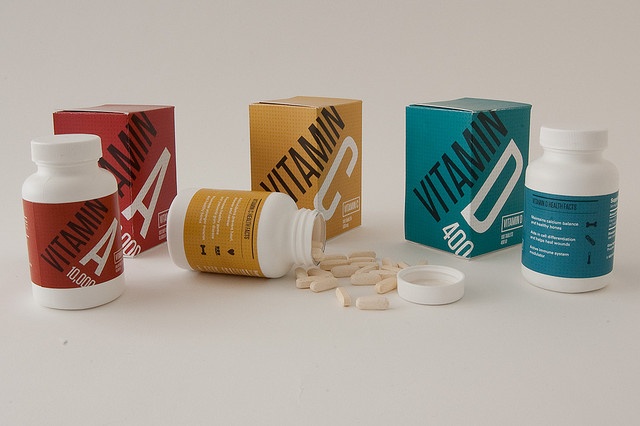
Two really important studies crossed my desk recently, both showing profound advantages of vitamin supplementation in reducing markers of heart disease and in prolonging life in those at risk of heart disease.

I’ve long been an advocate of supplements since we know that it is nearly impossible to get all the nutrients we need from our food grown in nutrient depleted soil.

These studies underscore the importance of multivitamins and vitamins C and E for a long, healthy life.

Vitamin C deficiency

Canadian researchers found that nonsmoking young people (ages 20 to 29) deficient in Vitamin C had elevated risks of serious chronic disease. The study showed that 47% of the 979 subjects had suboptimal or deficient blood levels of ascorbic acid, the major ingredient in vitamin C.

Those with low ascorbic acid levels had higher levels of C-reactive protein, higher blood pressure, larger waist circumference and higher body mass index.

Voluminous research shows that this combination of health issues vastly increases the risk of heart disease and stroke, diabetes and certain types of cancer.

The researchers from the University of Toronto attributed the vitamin C deficiency in their study subjects to poor diet and warned that not only do these risks factor present a very clear and present health danger, the long-term dangers become extremely serous when we take into account the compounding of these factors over the coming 20, 30 or 40 years.

Multivitamin and vitamin E supplementation

The second shows that multivitamins and vitamin E supplementation can be protective against death from heart disease,

The recent large study from the Fred Hutchinson Cancer Research Center in Seattle involved 77,719 people ages 50 to 76 over a 10-year period, showed that and those whole took multivitamins nearly every day had a 16% lower risk of dying of heart disease. Those who took more than 215 mg. of vitamin E daily for ten years or more were even more protected with a 28% lower risk of dying of heart disease.

Interestingly, the Fred Hutchinson study did not find any reduced risk for those who took vitamin C daily, although other studies have shown the importance of vitamin C for heart health, particularly in keeping blood vessels open.

The take home message here is that vitamin C certainly has an important role in your nutritional arsenal against a host of chronic and potentially fatal disease. The place of a good quality multivitamin is unquestioned and these studies add to the evidence in favor of vitamin E.

Kathleen Barnes

Resources:

Cahill, L, Corey PN et al, Vitamin C deficiency in a population of young Canadian adults. American Journal of Epidemiology 2009 Aug. 15;170(4):464-71.

Pocobelli, G, Peters, U et al. Use of supplements of mulitvitamins, vitamin C and vitamin E in relation to mortality. American Journal of Epidemiology 2009 Aug.15;170(4):472-83.

Frikke-Schmidt, H, Lykkesfeldt R, Rise of marginal vitamin C deficiency in atherogenesis: in vivo models and clinical studies. Basic Clinical Pharmacology and Toxicology 2009 Jun;104(6):419-33.

  • Share/Bookmark