Kathleen Barnes

Your guide to a long, healthy life while living gently on the planet

Archive for April, 2009

April 29, 2009

In these troubled times, many of us can’t afford to go totally organic.

So, if you’re going part-way, how do you get the most bang for your food buck?

The chart below will help you make some decisions. Starting with pesticide-laden peaches, apples and sweet green peppers down to the low pesticide load pineapples, avocados and onions, this will give you some helpful tools.

Pesticide Load in Fruits and Vegetables

FRUIT/VEGETABLE
1 (worst) Peach
2 Apple
3 Sweet Bell Pepper
4 Celery
5 Nectarine
6 Strawberries
7 Cherries
8 Kale
9 Lettuce
10 Grapes-Imported
11 Carrot
12 Pear
13 Collard Green
14 Spinach
15 Potato
16 Green Beans
17 Summer Squash
18 Pepper
19 Cucumber
20 Raspberries
21 Grapes-Domestic
22 Plum
23 Orange
24 Cauliflower
25 Tangerine
26 Mushrooms
27 Banana
28 Winter Squash
29 Cantalope
30 Cranberries
31 Honeydew Melon
32 Grapefruit
33 Sweet Potato
34 Tomato
35 Broccoli
36 Watermelon
37 Papaya
38 Eggplant
39 Cabbage
40 Kiwi
41 Sweet Peas-Frozen
42 Asparagus
43 Mango
44 Pineapple
45 Sweet Corn-Frozen
46 Avocado
47 (best) Onion
Source: Pollan, Michael. The Omnivore’s Dilemma (Penguin Books 2008)

I have to add a personal note here: I know coffee is technically a vegetable, certainly it is a staple of life for many of us. However, coffee is not included on the above list.

Coffee is one of the most pesticide intensive crops in the world. If you’re a coffee lover like I am, consider lowering your toxic load by buying organic coffee, better yet shade grown and fair traded to add to the eco-friendly perks. (Pun intended!)

Kathleen Barnes

  • Share/Bookmark

April 22, 2009

I couldn’t let Earth Day pass without offering some simple ways each of us can contribute to the healing of the planet.

I know. The enormity of the problem is often overwhelming.

The starfish story

It reminds me of the story of the small boy who came upon a beach littered with thousands of starfish, all in their death throes because the tide had carried them beyond the waterline.

The boy set about picking up the starfish and tossing them back into the sea. An old man walking the beach ridiculed the child for engaging in a hopeless cause.

“Why bother? You can’t save them all,” the old man proclaimed.

“That’s true. But I can save this one. And this one. And this one,” the boy replied as he continued returning the stranded starfish to the sea.

You can’t save the world by yourself, but you can do your part. Each of us together can make the change that will make a difference.

Do these today

Here are some really easy ways you can live sustainably, starting today. They will cost you nothing or almost nothing. In fact, most of them will save you money:

1. Get a stainless steel water bottle and stop drinking bottled water.
2. Invest in a few shopping bags and just say “no” to plastic bags.
3. If you don’t already do it recycle, at least your cans, bottles and paper.
4. Turn off the water while you’re brushing your teeth.
5. Limit your showers to five minutes.
6. Turn off the lights if you’re out of the room for more than five minutes.
7. Replace your regular light bulbs with compact fluorescents.
8. Eat organic foods as much as possible, especially fruits and coffee, which carry heavy pesticide loads.
9. Buy locally produced products, especially food. This saves on your gas, gives you fresher, more nutritious food and saves on the pollution and fuel consumption of long distance shipping.
10. Say “no” to acquiring additional plastic goods for your household.

Bonus

Finally, here’s your bonus:
Honor Earth Day by planting a tree on the south side of your house. In a few years, it will shade the house and lower your cooling costs in summer.

Happy Earth Day!

Kathleen Barnes

  • Share/Bookmark

April 14, 2009

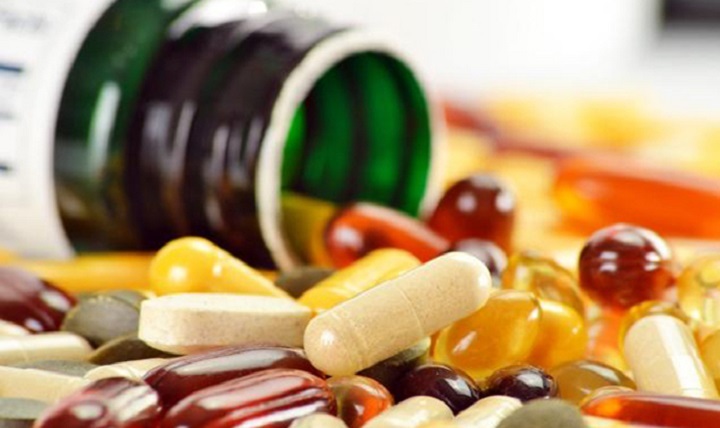
Americans are using more supplements and paying more careful attention to their health in this difficult economic climate, according to the April 20 issue of Time magazine.

Time surmises that the economic climate and fear of illness is driving sales of vitamins and other supplements that have risen 8 percent in the past year. The Vitamin Shoppe chain reports a 20% increase in sales.

All of us need to take supplements all of the time since our soils are so nutrient depleted that it is virtually impossible to get all the nutrients we need for optimum health. For several years now, the staid American Medical Association has recommended a multi-vitamin for every man, woman and child.

Supplementation should be a part of everyone’s wellness strategy.

Two facts explain the sorry state of our collective health:
* Most of us haven’t paid that close attention to our nutrient intakes;
* Three-quarters of us do not eat the minimum five servings of fruits and vegetables a day

If the loss of health insurance and the fear of illness in a declining economy are prompting more of us to take supplements to prevent illness, it is one positive sign during hard times that I can only hope will have lasting positive effects.

Kathleen Barnes

  • Share/Bookmark

April 6, 2009

by Dr. Hyla Cass and Kathleen Barnes
authors of
8 weeks To Vibrant Health: A Take Charge Plan for Women

It’s almost impossible to exist in today’s world without stress. We all feel it. The pressure of job, home, kids, health, finances go on and on. And now we’re “lucky” enough to have cell phones and Blackberries and iPhones, so your office, your kids, your spouse, your best friend in crisis, your child’s teacher . . . you name it: Stress can now find you any time any place.

Every day, our personal time shrinks. We consider it an indulge if we can squeeze in the time to simply sit and enjoy a cup of tea, read a book for the sheer pleasure of it or take a long leisurely walk in the woods.

Never before in history have humans had so much to do and so many ways to do things. Even sitting around the television set with your family can be stress producing with so many channels form which to choose (and deciding who gets to choose them) and then watching shows with so much fast-paced and violent action. We rarely get a chance to catch our breath.

Stress is taking a huge toll on our health.

The American Psychological Association estimates that 75% of all visits to primary care physicians are for stress-related problems and 75% of us have reported we feel “great stress” at least one day a week.

A 2007 study by he American Psychological shows that more than one-third of Americans suffer extreme stress on a daily basis.

Unresolved stress that plaques almost al of us can lead to a downward spiral of depression and anxiety and cause a wide range of physical problems from headaches and heart disease to weight gain, gastrointestinal problems and more.

Stress itself is not the issue. Stress is in our lives whether we like it or not. The real question is this: How do you deal with stress?

You might find some rather surprising causes of stress sin your life if you complete the stress questionnaire on the 8 Weeks to Vibrant Health website.

Until you find a way to resolve and release your stress, you’re creating a vicious cycle than can cause serious damage to your health in the long run. This type of stress is sometimes called chronic or toxic stress. This kind of stress overrides your body’s natural abilities to bounce back from stressful situation. Stress keeps piling on stress, laves stress hormones at high levels and suppresses your immune system, leaving you vulnerable to colds, flu and all kinds of illnesses.

We don’t want to scare you, but this fact has been scientifically validated: People who are diagnosed with various types of cancer have frequently undergone a major life stress, such as the breakup of a marriage, a bankruptcy or the illness or death of a close family member.

The first step in addressing toxic stress is to recognizing the stressors in your life, take action to break the stress cycle and we’ll offer you some long-term methods to keep stress from spiraling out of control.

Here are signs of stress that we may have forgotten how to recognize:
• muscle tension
• irregular breathing
• pounding heart
• butterflies in stomach
• agitation
• irritability
• sudden flush

The simplest and fastest way to address stress is through your breath. Taking deep slow breaths through your nose will break the stress cycle within a few seconds and allow you to recover your mind-body equilibrium.

Dr. Andrew Weil, the famed integrative doctor, offers a simple breathing technique that he promises will heal almost anything that ails you because it breaks the stress cycle which causes so many health problems.

Repeat this four times:
• Inhale slowly through your nose to the count of four.
• Hold your breath to the count of 7.
• Exhale slowly through your pursed lips (like blowing through a straw) to the count of eight.

That’s it. Simple! All you need to do is repeat this at least twice a day, more if you recognize the signs of stress. You’ll be amazed at the results.

There are also a number of natural supplements that can help your through stressful times, including valerian, L-theanine, GABA, kava kava, magnesium, L-glutamine and B-vitamins. For specifics on how to use them and dosages, please see our book, 8 Weeks to Vibrant Health: A Take Charge Plan for Women.

Please join us for the 8 Weeks to Vibrant Health teleseminar on Taming the Stress Monster starting Thursday, April 16. Register here.

Even though the series targets womens’ health problems, stress is everyone’s problem,. Men are always welcome to join us.

If you’ve missed to earlier segments, you can easily catch up.
When the series is complete, we’ll be making available a coaching package containing recordings of all the sessions.

–Kathleen Barnes

  • Share/Bookmark