Kathleen Barnes

Your guide to a long, healthy life while living gently on the planet

Archive for March, 2009

In the last couple of days, I’ve had several conversations with people who want to keep toxic chemicals out of their homes, protect the environment and to save money at the same time.

It sounds like a big order, but there are actually easy answers:

You can clean almost anything in your home with seven ingredients. You probably already have most of them in your kitchen:
• Vinegar
• Baking soda
• Borax
• Lemon juice
• Olive oil
• Vegetable-based liquid soap
• Washing soda

Many people seem to think that cleaning naturally is expensive and inconvenient ad only minimally effective.

Nothing could be farther from the truth. It’s cheap. It’s easy and it’s effective. AND you’re not exposing yourself to a toxic soup that that includes allergens, carcinogens, neurotoxins, hepatotoxins, central nervous system depressants that can cause everything from liver failure to life-threatening allergic reactions to cancer to death.

We are all exposed to toxins every day. We can’t avoid them. Research tells us that even newborn babies already have nearly 300 toxic substances in their bodies, passed on from their mothers. Over our lifetimes, that toxic load builds and builds until, one day, we may tip the balance and experience one of the terrible side effects of toxic overload.
So if we can reduce our toxic load as much as possible, we can avoid that toxic load, we can postpone or even overcome toxic overload.

Ok. I’m back from my toxin rant.

Homemade natural cleaning products work. They are safe, easy and cheap. What’s not to love?

What could be simpler than combining ½ teaspoon of vegetable based oil, 3 tablespoons of vinegar and 2 cups of water in a spray bottle to make your windows sparkling clean for a nickel a bottle? Add a few drops of lemon essential oil to long-lasting shine, a great scent and to help energize the window washer!

How about scrubbing sinks, tubs and showers with a gentle paste of baking soda and borax? It works just as well as commercial cleaners with no toxic fumes and again, it costs mere pennies.
Pour a cup of borax in your toilet and leave it overnight. That’s it takes to wipe out my least favorite household task. Add a few drops of tea, tree, lavender or white thyme essential oil for disinfection.

If your oven is an embarrassment like mine can be, try this:

Sprinkle water in the bottom of the oven, then cover the yuck with baking soda. Sprinkle some more water on top and let it sit overnight. In all but the worst cases, you’ll be able to simply wipe it clean the next morning. If there is still stubborn baked on grease, add a little washing soda to the mixture to cut the grease. Rinse well.

The best book I’ve read on non-toxic cleaning is Annie Berthold-Bond’s Clean and Green. Annie website is http://www.anniebbond.com.

All of these recip0es are nontoxic and they don’t require any power tools. If you have a truly untenable stain or grease sploch, you might consider buying a Scunci steam cleaner. It uses nothing but water. In fact, you’ll damage it if you try to add any cleaners to it, and the superheated water will clean just about anything for a few pennies worth of electricity.

Finally: If you want to help keep outside toxins from entering your home, have all family members leave their shoes at the door. I actually have “indoor ” and “outdoor” shoes and I scrupulously keep them apart to avoid tracking in toxins that attach themselves to our shoes as we walk around our toxic world.

–Kathleen Barnes

http://www.kathleenbarnes.com

Share

I’ve been a yoga teacher for more than 30 years. I’ve taught yoga breathing techniques to hundreds of students. I know the importance of the breath for health and emotional well-being.

But the teacher can always be taught.

In this case, Dr. Andrew Weil showed me a new/old breathing technique that is the most powerful and simplest method I have ever known to power up my health literally in three minutes a day.

Dr. Weil, author of 8 Weeks to Optimum Health and integrative medicine guru supreme, was a featured speaker at Natural Products Expo West in Anaheim a couple of weeks ago.

I want to share with you the simple technique he taught the audience as a means of addressing stress, insomnia and as an overall health enhancer.

Here goes:
1. Inhale through your nose to the count of four.
2. Hold for a count of seven.
3. Exhale slowly through pursed lips to the cont of eight.
4. Repeat four times.
5. Do this twice a day.

That’s it! You don’t have to build up to more repetitions (although Dr. Weil says you can do it as many as eight times in a session). You don’t have to do anything except breathe. Here’s the link for Dr. Weil’s directions for this technique and a couple of others that are almost as valuable.

This type of breathing balances your autonomic nervous system erases stress and rebalances your energy. Breathing is the only bodily function we can control consciously, but if we stop thinking about it, it continues on its own (good thing or we’d all die from forgetting to breathe!). So doing this little exercise balances the conscious and unconscious body functions. Voila! Better health.

I’ve been religiously following Dr. Weil’s advice for the past two weeks and I can tell you that it has profoundly changed my life.

I often wake up in the middle of the night and find myself unable to go back to sleep because my brain starts thinking of all the things I need to do. I toss and turn for a couple of hours and finally wind up getting up and working at 4 or 5 a.m.

Now when I wake up, I simply do this breathing technique and I am rarely awake more than a minute or two.

Of course, we all lead stressful lives, so I do this a couple of times a day (more if I am very stressed). I can immediately feel my heart rate slow (and probably my blood pressure). This breathing technique stops the toxic stress cycle that leads to a multitude of health problems and it even stops my 4 p.m. low cortisol “I gotta have some coffee and chocolate” obsession.

If you’re a regular reader, you’ll know I’m not a superlative type of person.
But I have superlatives for this simple technique. It has changed my life and I know it will change yours, improve your health and give you control over stress. If you’re not feeling these challenges, then do the breathing to keep yourself in balance.

It’ll cost you nothing. Just about three minutes of your time every day.

Who could ask for more?

By Kathleen Barnes
Natural Living Now

Share

Can you die from using antidepressants? Absolutely, according to a large study published in the Journal of the American College of Cardiology.

For the first time, scientists have found an alarming link between the use of antidepressant medications and sudden cardiac death in women not previously diagnosed with heart disease.

Scientists long-ago documented a link between depression and heart disease, but this study based on a long-term study of 63,000 women shows that women with clinically diagnosed depression who took antidepressants were more than twice as likely to experience sudden cardiac death as those who did not take the drugs.

The results, based on data collected in the long-running Nurses Health Study, show that the more severe a woman’s depression, the greater her risk of sudden heart failure and death in a group of women never diagnosed with heart disease. However, researchers tied the risk of death not to the depression alone, but to the prescription medications used to treat it.

The results do not necessarily apply to men, since only women are involved in the Nurses Health Study.

The antidepressant drugs were not associated with a higher risk of heart attacks or overall fatal heart disease.

Researchers said the study’s findings were “surprising” and “merit scrutiny.”

The use of antidepressant medications is pervasive in American society. One in ten American is using antidepressants, according to recent government figures and that number has nearly tripled in the last decade. Drugs like Xanax, Prozac and Zoloft are in such wide use that 17-year old I know says she is the only teen among her friends who is not using antidepressants.

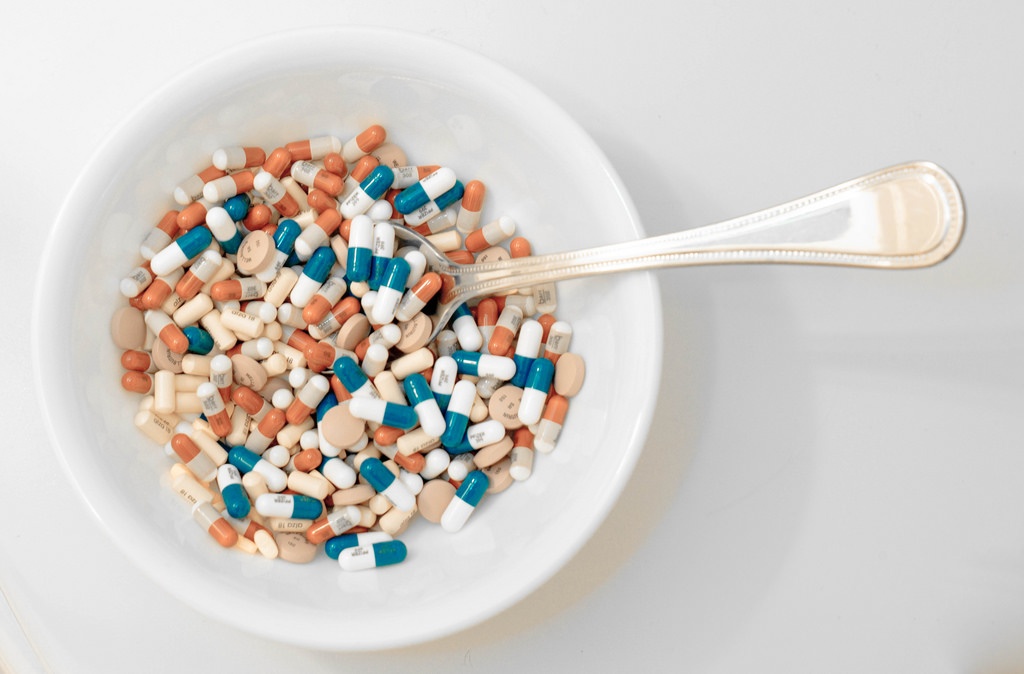
Doctors are prescribing antidepressants like candy and we’re happily gobbling them up, despite their obvious risks. There are also the not-so- obvious ones, like the fact that lack of attentiveness associated with these drugs has been blamed for anywhere from 300,000 to 2 million car accidents a year.

I can’t imagine any drug being worth the risk of a sudden heart failure, but the widespread use of these dangerous drugs is even more perplexing when we consider that they only work in in about one-third of the people who take them.

Yet medical literature is highly biased toward supporting the use of antidepressants and there have been suggestions that negative studies have been biased or even suppressed. I can pnl;y surmise that is because these drugs rake in big buck for the drug companies.

I can’t for the life of me underdstand why anyone woudl want to take these drugs, especially in light of the likelihood that:
1. They don’t work
2. They might kill you

These are dangerous drugs. They should not be on the market. I am perplexed that the mainstream media has not widely reported this important story.

Depression is a disease, most often caused by brain chemistry imbalances. It requires treatment.

Fortunately, if you are clinically depressed, you have choices.

There are numerous natural ways of approaching the problem without the high risks.

Among the best supplements are GABA, rhodiola, St. John’s wort, 5-HTP, SAM-e, phenylalanine and tyrosine.

WARNING: If you are taking prescription antidepressants, DO NOT stop taking them suddenly. This can also cause severe health problems.

You can learn more natural ways to treat brain chemistry imbalances in the April 30 session of the ongoing 8 Weeks to Vibrant Health no-cost teleseminar series with Dr. Hyla Cass and myself, based on our book, 8 Weeks to Vibrant Health: A Take Charge Plan for Women. You can register for the teleseminars here and you can buy the book here.

Share

March 5, 2009

Everyone suffers the occasional bout of anxiety, but for about 19 million of us – more women than men – it’s frequent enough to interfere with daily activities. Why are women more prone to anxiety? A new study from the American Psychological Association suggests it’s because estrogen lowers the level of an enzyme believed to regulate anxious thoughts.

But there’s no need to worry about worrying: whether you have the jitters over a new job or you’re nervous about money or anything else, nature has its own pharmacy of little-known, but well-proven herbal remedies that can calm you down in a hurry, including:

California poppy. Lab tests show it promotes relaxation during stressful situations and inhibits the production of the stress hormone adrenaline. French researcher found that people with high anxiety were able to reduce their anxiety symptoms by nearly 25% in as little as a week. That’s why Germany’s reputable Commission E has approved an herbal remedy that made primarily of the gentler non-narcotic cousin of the opium poppy to treat nervousness and anxiety. “California poppy helps improve mood by reducing monoamine oxidase (MAO) in the brain, in much the same way prescription anti-anxiety drugs do, without the side effects,” says Pacific Palisades, California natural physician Hyla Cass, M.D., my co-author for 8 Weeks to Vibrant Health: A Take Charge Plan for Women.

Your best dose: California poppy comes in a liquid extract form. Because of the varying strengths, it’s best to follow manufacturer’s directions.

5-HTP. Your body uses 5-HTP (5-hydroxytryptophan) to manufacture the brain chemical serotonin – and a serotonin boost has been shown to alleviate anxiety. It also has a unique way of helping boost your body’s natural production of the sleep hormone melatonin. “I love 5-HTP because no other drug restores your body’s natural production of serotonin, even prescription drugs that simply block the serotonin cycle, but don’t fix the problem,” says New York City nutrition scientist Shari Lieberman, Ph.D., author of The Real Vitamin and Mineral Book. Studies from the National Institutes of Health lengthened the time subjects spent in anxiety banishing REM sleep by about 25%, making a huge difference in their ability to awaken feeling rested and refreshed.

Take 50-100 milligrams one hour before bedtime. If that’s not enough, increase by 50 mg. a day until you reach a maximum of 300 mg. The effect is boosted by a vitamin B-complex supplement.

Passionflower. In a recent Middle Eastern study (EDS: from Iran), 32 people suffering from general anxiety disorder took passionflower liquid extract or the anti-anxiety drug oxazepam (Serax. Similar to Xanax and Klonopin). Passionflower actually worked better and with no side effects. Plus, French scientists found that a preparation that includes passionflower relieved anxiety in 43% of subjects after just four weeks. “Passionflower removes the anxiety and tension that prevents you from relaxing without making you feel drowsy,” says Dr. Cass, author of Natural Highs. Dr. Cass says passionflower works best when combined with other herbs and nutrients like GABA, L-theanine, hops and B-vitamins. You can find the perfect blend in Dr. Cass’ Calm formula, available at cassmd.com or by calling 800-362-2950.

Your best dose: 100 mg unless in a combination formula where you need only 1/10 the dose.

Rhodiola. This arctic herb actually changes the way your body reacts to stress, making you feel relaxed and upbeat, says Columbia University psychiatrist Richard Brown, M.D., author of Stop Depression Now. Russian animal studies showed that subjects exposed to extreme stress chilled out an improved their performance by an astounding 159% when they had rhodiola in their systems! “It works to give you a boost when you need one and calm you down when you need to calm down,” says Dr. Brown.

Your best dose: Take 100-300 milligrams daily. Dr. Cass’ Energy formula contains 100 mg per dose, along with two other adaptogenic herbs. The best standardized product is Rosavin, available at health food stores.

–Kathleen Barnes

http://www/kathleenbarnes.com

Share