
Kathleen Barnes

Your guide to a long, healthy life while living gently on the planet

Archive for January, 2009

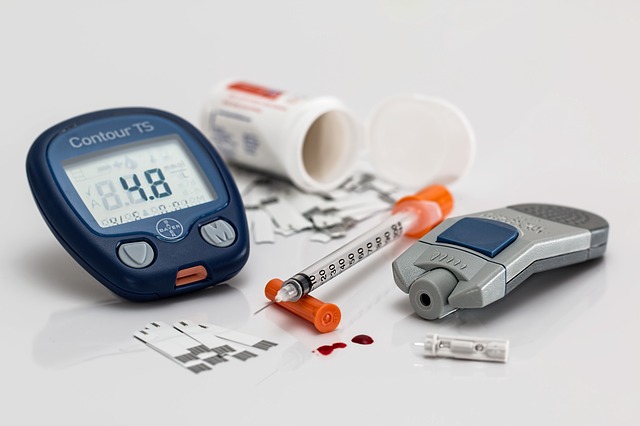
Startling new statistics on diabetes released by the National Institutes of health this week show that the rates of diabetes and impaired blood sugar in American are increasing at alarming levels.

Nearly 13% of American aged 20 and over have diabetes, but 40% of them don’t know it. This puts them at high risk for the tragic side effects of diabetes, including heart disease, stroke, kidney disease, blindness, impaired circulation that can lead to amputations and more.

If that’s not gloomy enough for you, consider this: From 1995 to 1997, there were 4.8 new cases of Type 2 diabetes per 1,000 Americans. Ten years later, that rate had increased by 89% to 9.1 new cases per 1,000 Americans.

Worse yet, 36% of men and 23% of women and 16% of teenagers have “pre-diabetes,” says the NIH.

Pre-diabetes is a con

The term “pre-diabetes” is a con. It means that you have impaired blood glucose function and without drastic measures, you will soon have diabetes and all of its ugly companion diseases. It lulls too many patients into complacency.

It’s even more frightening when you consider the number of teenagers who are being diagnosed with diabetes or more benign-sounding “pre-diabetes.” The disease
Now known as Type 2 diabetes was once known as adult onset diabetes.

Diabetes was once the province of senior citizens. The dread companion diseases are more-or less accepted turf there. But there is something inherently wrong when we think of obese teenagers with arterial blockages, having heart attacks at 30 and bypasses at 35, if they survive that long. Just think about where these poor kids will be when they’re 40.

These statistics aren’t just numbers, folks. They are our mothers, father, sisters, brothers, husbands, wives and, sadly, our children. They are real people and this illness takes a toll on everyone around someone with diabetes.

This a tragedy of national proportions. Diabetes is a terrible disease. There are no two ways about it. Once you’re diagnosed, the changes of reversing diabetes are diminished. The chances of controlling it are better. But the best bet is prevention.

Prevention

How can you prevent diabetes?

1. Stay away from sugar and foods with hidden sugar: This is a good start, but it’s not the entire answer.

2. Control your weight: Most of us know that obesity is a factor in almost all cases of Type 2 diabetes. Studies also show that just losing 10% of your body weight can dramatically lower blood sugars.

3. Exercise is another key factor in diabetes management and prevention., not only for the obvious reasons. Muscle activity actually helps your body to better use the insulin that your pancreas is producing.

4. Know your mineral status and correct mineral imbalances to help prevent a downward spiral of metabolic problems that lead to diabetes and a host of other health problems, according to Robert Thompson, M.D., with whom I wrote The Calcium Lie: What Your Doctor Doesn’t Know Could Kill You (InTruth Press, 2008). Learn your mineral status by getting a hair tissue mineral analysis and following the recommendations tailored to your specific needs.

Finally, do what ever it takes to fend off the diabetes monster. It is one of the most terrible diseases we face and one of the most preventable. It’s up to you.

This entry was also posted on Dr. Scott Olson’s website. Check it out. He’s got some great information and he’s an especially good resource for busting sugar addictions.

  • Share/Bookmark

Jan. 27, 2009

[Note: Tough times call for us all to get stronger. Today I'm starting to talk about economic survival on this blog and on my website. Everyone I know, myself included, is being affected by this economic downslide. I'm offering some thoughts about how to survive and thrive in these tough times. I invite your comments and ideas. --Kathleen]

Sure, you love your kids. I love my kids, too. Sure, you want the best in life for them. We all do. Sure, you want them to have a good education that will give them an opportunity for financial security.

Maybe you’ve even funded 529 plans for them that will give them a big boost
When it comes time to cough up those tens of thousands of dollars it will cost to get a college education.

So it may sound selfish when I tell you not to use your retirement money (this includes home equity) to pay for your kids’ college educations.

Here is the simple and practical reason why: A college education can be funded by loans. There are no loans to cover your retirement.

Yes, it’s tough to graduate from college with a debt burden. But let’s hope your kid has learned something in college and is smart enough to parley that knowledge into a decent income. He’s got his whole working life to pay back the loan. She can be creative and take a public service job that will help write off the loan the longer she stays in the job.

You, on the other hand, have worked your lifetime for your 401(k) and your home. If you’re like most of us, the vagaries of poor economic policy that had nothing to do with you have now robbed you of a large percentage of the value of your portfolio and trashed the value of your home.

I don’t want to sound like Gloom and Doom Panic Monger Suze Orman here, but it’s going to be really hard to regain that lost value unless you have 30 years or so until you plan to retire.

Our leaders simply don’t have experience with this, but the experts tell us that it took the average person 25 years to recover from losses during the Great Depression.

A little personal info: I’m 60 years old. I’d planned to retiree at 70. My husband is 67 and he planned to retire in three years. Now, for both of us, those goals are so far out of sight they’re over the horizon.

Of course, none of us know how long we’ll live. That means we don’t know how many years of retirement we’ll have to fund.

My father, at 86, lives in true terror that he will outlive his money, which has literally been decimated by market downturns in 2001 and this past crisis. We’re not in much of a position to help.

I’ll be talking about this much more as we explore ways to survive in this bleak economic environment, but for now, take this home:

Tell your kids now they’ll be on their own to find financing for their college educations.

Fund your retirement, not your kids’ college educations.

—Kathleen Barnes
http://www.kathleenbarnes.com

  • Share/Bookmark

January 19, 2009

Most of us think sugar adds sweetness to life, but nothing could be farther from the truth.

Sugar is an artificial food that is not only addictive, it causes diabetes and weight gain.

Ask anyone who “needs” that boost of a Coke at 4 p.m. or who can’t get through a day without a donut or piece of cake or handful of cookies.

What’s happening when you get that sugar jolt? The sugar travels fairly quickly through your system and gets to your brain, which loves sugar because it actually causes a “high.”

Sugar highs and lows

The high doesn’t last long because blood sugars begin to crash and so, a couple of hours later, you find yourself looking for another sugar high. Maybe this time it’s a cocktail or a pre-dinner snack because you’re tired and need energy to get dinner ready. Dinner, presumably containing a little protein, will even out the sugars for a few hours, but the inevitable crash comes again, perhaps just before bedtime, so you need a little “midnight snack,” and on and on.

If you think you’re not addicted to sugar, try this test: Go completely without sugar for three days. If you don’t want it, crave it and eventually find yourself feeling cranky, sleepy and unfocussed, you’re not addicted. But if you’re like the average Joe who eats 1/4 pound of sugar every day, you’re addicted.

What is this doing to your body?

Insulin resistance

Well, among other things, it’s causing insulin resistance. That means your pancreas is producing the insulin you need to properly metabolize glucose in its many forms, but your body has lost the tools it needs to balance out those sugars, causing a vicious cycle of high blood sugar, sugar crashes, low blood sugar and sugar cravings which, when they’re satisfied, lead to sugar highs and crashes. Over and over until your body can no longer handle sugars at all.

You can find this and lots more at Dr. Scott Olson’s website.

Obesity

Among other things, that sugar is making you fat. Yes, sugar is in itself high in calories and completely without any nutritional value. But even worse, the most common types of sugars like high fructose corn syrup actually convert to fat much more quickly than any other type of food.

Genetic damage?

Now comes a new piece of research that suggests that sugar not only hurts you, it can hurt your children and grandchildren.

No, I’m not talking about Moms and Nanas who stuff the kids and grandkids with sweets. I’m talking about sugar causing genetic damage.

The Australian research team found that one hit of sugar can affect you for as long as two weeks. Furthermore, regularly eating sugar can actually cause permanent genetic damage that passed along bloodlines.

“We now know that chocolate bar you had this morning can have very acute effect, and those effects can continue to up to two weeks,” said lead researcher Sam El-Osta, for Australia’s Baker IDI Heart and Diabetes Institute.

Regular poor eating habits amplify the sugar damage, said El-Osta, with genetic damage that can last month or years and can potentially be passed along bloodlines into children.

If you can’t stop eating sugar for yourself, do it for your future children.

–Kathleen Barnes
Natural Living Now

http://www.kathleenbarnes.com

  • Share/Bookmark

Today is a first: I’m re-posting a blog entry from I’ve never re-posted a blog entry before, but I plan to start now. Anthony Ruffa a master herbalist a/k/a WildAlchemist, is reporting on the latest scientific evidence that should cause us all to re-think any thoughts of drinking tap water. Here’s his blog entry, reprinted with permission:


Top 11 compounds in US drinking water

A comprehensive survey of the drinking water for more than 28 million Americans has detected the widespread but low-level presence of pharmaceuticals and hormonally active chemicals.

Little was known about people’s exposure to such compounds from drinking water, so Shane Snyder and colleagues at the Southern Nevada Water Authority in Las Vegas screened tap water from 19 US water utilities for 51 different compounds. The surveys were carried out between 2006 and 2007.

The 11 most frequently detected compounds – all found at extremely low concentrations – were:

• Atenolol, a beta-blocker used to treat cardiovascular disease

• Atrazine, an organic herbicide banned in the European Union, but still used in the US, which has been implicated in the decline of fish stocks and in changes in animal behaviour

• Carbamazepine, a mood-stabilising drug used to treat bipolar disorder, amongst other things

• Estrone, an oestrogen hormone secreted by the ovaries and blamed for causing gender-bending changes in fish

• Gemfibrozil, an anti-cholesterol drug

• Meprobamate, a tranquiliser widely used in psychiatric treatment

• Naproxen, a painkiller and anti-inflammatory linked to increases in asthma incidence

• Phenytoin, an anticonvulsant that has been used to treat epilepsy

• Sulfamethoxazole, an antibiotic used against the Streptococcus bacteria, which is responsible for tonsillitis and other diseases

• TCEP, a reducing agent used in molecular biology

• Trimethoprim, another antibiotic

The concentrations of pharmaceuticals in drinking water were millions of times lower than in a medical dose, and Snyder emphasises that they pose no public health threat. He cautions, though, that “if a person has a unique health condition, or is concerned about particular contaminants in public water systems, I strongly recommend they consult their physician”.

Christian Daughton of the EPA’s National Exposure Research Laboratory says that neither this nor other recent water assessments give cause for health concern. “But several point to the potential for risk – especially for the fetus and those with severely compromised health.”

Daughton says the contamination surveys help people realise how they are intimately and inseparably connected with their environment. “The occurrence of pharmaceuticals in the environment also serves to make us acutely aware of the chemical sea that surrounds us,” he says.

Modern life

While the US government regulates the levels of pathogens in US drinking water, there are no rules for pharmaceuticals and other compounds, apart from one: the herbicide atrazine. The atrazine levels measured by Snyder and colleagues were well within federal limits.

Snyder says water utilities could make drinking water purer. But the costs of “extreme purification” – far beyond what is needed for safety alone – are huge in terms of increased energy usage and carbon footprint. Ultra-pure water might not even be safe, adds Snyder.

The widespread occurrence of pharmaceuticals and endocrine disruptors reflects improved detection techniques, rather than greater pollution, says Snyder. Contamination is a fact of modern life, he adds.

“As we continue to populate and aggregate, our wastes will certainly accumulate where we live,” he says. “We as a species have decided to live a modern life, with pharmaceuticals, plastics, transportation – therefore we must accept that there will be a certain degree of contamination.”

Journal reference: Environmental Science and Technology, in press

Source: http://www.newscientist.com/article/dn16397-top-11-compounds-in-us-drinking-water.html

  • Share/Bookmark

Olive leaf extract is a staple in my medicine cabinet all the time, but even more so during cold and flu season.

That’s because it’s a broad spectrum anti-bacterial, anti-viral and anti-fungal compound that knocks out whatever is ailing you.

That means there’s no need to know if that cold caused by a virus is deteriorating into bronchitis caused by opportunistic bacteria that can move in after you’re weakened by the virus.

If you’re anything like my husband, who thinks he is about to die of pneumonia at the first sign of a scratchy throat, olive leaf extract can be immensely comforting, not to speak of exceptionally effective whether it is a cold, the flu or something more serious.

Oleuropein, one of the active ingredients in olive leaf extract, has been shown to search out and inactivate harmful bacteria. Unlike synthetic antibiotics, it leaves the good bacteria alone, so you don’t risk swinging into dysbiosis or unbalanced gut bacteria by taking it.

In fact, olive leaf extract is one of the most effective treatments for dysbiosis recommended by Dr. William Crook, author of The Yeast Connection and other books on yeast overgrowth.

Oiive leaf extract is increasingly being used in Europe instead of synthetic antibiotics.

Because it helps strengthen the immune system many practitioners recommend taking olive leaf for several months for optimal immune system strengthening effects.

Dr. Ray Sahelian recommends 1500 mg or more daily. You can find scientific sources for the benefits of olive leaf extract at his website.

There are no adverse side effects from olive leaf extract, although some people experience a rather unpleasant flu-like effect often called die-off or, more scientifically, Herzheimer’s reaction, caused by toxins released by microorganisms killed by the extract. This usually passes within a few days.

Olive leaf extract has also been shown to:
• reduce blood pressure and cholesterol
• reduce inflammation
• improve blood sugar control
• have antioxidant effects that slow the aging processes
• boost energy
• improve symptoms of chronic fatigue syndrome
• diminished herpes viral infections, including shingles

Olive leaf extract is available online and at nutrition outlets and health food stores everywhere. Be sure to get a product that is standardized to at least 15% oleuropein.

Although there are no known drug interaction or side effects, be sure to check with your health care professional before you use olive leaf extract or any other supplements.

—Kathleen Barnes
http:www/kathleenbarnes.com

  • Share/Bookmark

by Dr. Robert Thompson, co-author, with Kathleen Barnes,

The Calcium Lie: What Your Doctor Doesn’t Know Could Kill You (InTruth Press, 2008)

Are you overweight? Is someone you love overweight?

No doubt your doctor has told you to eat less and exercise more while discreetly adjusting a lab coat to cover a personal paunch. Take a good look. Is your doctor an example of good health? If not, maybe your doctor doesn’t have the answer.

You’ve struggled. You faithfully get up at 5 a.m. every day for a morning jog. You’ve tried Atkins, South Beach, Jenny Craig and Weight Watchers. You gulp down chromium picolinate, 5-HTP, garcinia cambogia, hoodia, Alli and every fad supplement. You’ve probably had some success, but for almost all of us, the success is temporary. The weight begins to creep back on until you’ve regained all you lost and then some.

Why is that? Are we all weak-willed, unable to resist the temptation of the dinner plate? Is our willpower so lacking that we can’t even do the basic exercise of pushing away from the dinner table?

No! We are turning into a fat nation (Generation XL) because we are quite literally starving.
That’s right: In a time of unparalleled food wealth, we cannot get the nutrients our bodies need to function. Specifically, mineral deficiencies and imbalances, especially excess calcium intake, are leading us to metabolic failures of unprecedented proportions.

Starving for minerals

What are we starving for? Minerals. What are we stuffed with? Calcium.

Our society is obsessed with one of the most deadly medical myths ever perpetrated: That we need calcium in order to have strong bones. Nothing could be further from the truth.

Our bones are made of a dozen or more minerals, and calcium is just one of them. We need all of these minerals in the proper proportions

Most of us get way too much calcium and nowhere near enough of the others minerals we need, not only for strong bones, but for our overall health.

Calcium hardens concrete

Did you know that construction workers actually use calcium to harden concrete? That explains a lot about the harmful effects of excess calcium in your body.
It’s a vicious circle: We are starving for the minerals we need, and so we are driven through cravings to eat more and more food in an effort to get those minerals into our cells where they are essential for literally trillions of metabolic functions.

But our foods are low in minerals because of our mineral-poor soil and because few are vine ripened. So we eat more and more.

Our metabolism is slowed because of calcium excess, adrenal suppression and thyroid hormone resistance (Type 2 hypothyroidism).

Digestion is impaired; stomach acid is deficient or improperly released.

Protein is not fully digested and essential amino acids are not absorbed.

Amino acids can’t make it into our cells due to sodium pump failure. More cravings are stimulated by amino acid deficiencies and resulting neurotransmitter deficiencies.

Downward spiral

It’s a terrible, uncontrollable, downward spiral. Since we all know the well-documented risks of being overweight, it all seems so sad to think that we are killing ourselves in a desperate struggle to get the nutrients we need to survive and all the while we are admonished to get our calcium, diet and exercise.

Here’s the answer in short: Get all the minerals you need with the liberal use of unrefined sea salt.

I’m here to tell you that if you exercise like a hamster on the wheel and eat nothing but lettuce for the rest of your life, it will cause no permanent changes unless you treat your underlying metabolic imbalances by balancing and raising your mineral levels.

All meaningful weight loss must involve treating the underlying metabolic problem. Only proper mineral balance in the body can do this.

You’ll find a more detailed explanation of the effects of excess calcium on your weight and a host of other health problems in The Calcium Lie: What Your Doctor Doesn’t Know Could Kill You, my book written with health writer Kathleen Barnes. You’ll also find loads of material on our website, www.calciumlie.com.

–Dr. Robert Thompson is a physician practicing in Anchorage and Soldotna, Alaska.

  • Share/Bookmark

When you quit smoking, the health benefits are almost immediate. In fact, your blood pressure will begin to drop within 20 minutes after your last cigarette.

It gets better every day you continue your journey to health.

I found this timeline to regaining health taped to a wall in my doctor’s office several years ago. I’ve never been able to verify the source, but the physiological benefits are widely reported.

As most of you know by now, I am a passionate advocate of natural health. No lectures here, but if you smoke or you know someone who smokes, you know that there is no single behavior that is more destructive to your health. Do whatever it takes to break this life-stealing addiction. That includes the use of pharmaceuticals.

I know how hard this addiction is to break, so take advantage of what medical science can offer to help you, whether it’s Wellbutrin, Chantix, nicotine gums or Zyban. Use whatever works. The side effects of these aids are so much less than the damage that accompanies smoking that they are well worth the tiny cost.

If you’ve decided to give up smoking, check out these easy assists and print out this timeline to re-inforce to your choice to become healthier:

Week 1:
What’s going on in your body: Blood pressure and pulse have returned to normal 20 minutes after your last cigarette.
What you should do now: Calm your cravings. Studies show nicotine cravings are strongest in the first 6 weeks of quitting, so begin using patches, gums and even prescription medications like Zyban from Day One. Drink lots of water and juice to help flush nicotine out of your system, which takes about 5 days.

Month 1:
What’s going on in your body: Lung function improves 30%. Taste and smell enhanced. Energy increases.
What you should do now: Continue to calm your cravings by using gums, patches, etc. Plus, begin to make behavioral changes. Quite drinking coffee, alcohol and change other behaviors that lead to smoking, such as sitting at the dinner table after the meal is finished.

Months 2-3:
What’s going on in your body: Heart attack risk has fallen 25%. Cancer risk has fallen.
What you should do now: Take a hike! The average ex-smoker gains 10 pounds because smoking raises your metabolism, but in one study, those who exercised avoided the metabolism slowdown and gained substantially less.

Months 3-6:
What’s going on in your body: Coughing, sinus congestion and shortness of breath decrease.
What you should do now: Join a support group. You’re over the physical addiction to nicotine, but the psychological addiction is much harder to kick.

One Year:
What’s going on in your body: You’ve cut your risk of heart disease in half in just one year! Congratulations!
What you should do now: Continue what you’ve been doing. It’s working!

Five years:
What’s going on in your body: Lung cancer death rate has decreased by 50%. Stroke risk is reduced to that of a non-smoker. Risk of cancer of the mouth, throat and esophagus is reduced by 50%.
What you should do now: Watch out for stresses that may sneak up on you and get your back to smoking before you even realize it. Be especially aware if you or a family member has health challenges or there are relationship problems or financial worries. Unfortunately, many people who have kicked the habit for as long as 9 years go back to smoking when they meet a major stressor.

Ten years:
What’s going on in your body: Lung cancer death rate is similar to that of a nonsmoker. Risk of cancer of mouth, throat, esophagus, bladder, kidney and pancreas decreases. Precancerous cells are replaced with healthy cells.
What you should do now: Throw a big party and congratulate yourself. You’ve made it past the nine-year relapse danger zone. Good for you!!

  • Share/Bookmark